

FOR CLIENTS
Therapy Tools & Coping Resources
A collection of evidence-based tools you can use between sessions, or anytime you need a moment of support. These are meant to complement your therapy work, not replace it.
Please note: These tools are meant for general wellness support and psychoeducation. They are not a substitute for professional mental health treatment. If you are in crisis, please scroll to the bottom of this page for emergency resources.
GROUNDING



5-4-3-2-1 Technique
Sensory Grounding Exercise
When anxiety, panic, or dissociation pulls you out of the present moment, this technique brings you back by anchoring you in your five senses.
5 things you can SEE
Look around and name 5 things in your environment right now.
4 things you can TOUCH
Feel 4 different textures around you; your clothes, hair, skin, surface nearby.
3 things you can HEAR
Listen for 3 sounds, even subtle ones; the AC, traffic, your breathing.
2 things you can SMELL
Notice 2 scents around you, or take your wrist to your nose.
1 thing you can TASTE
Notice 1 taste in your mouth; sip water



BREATHING
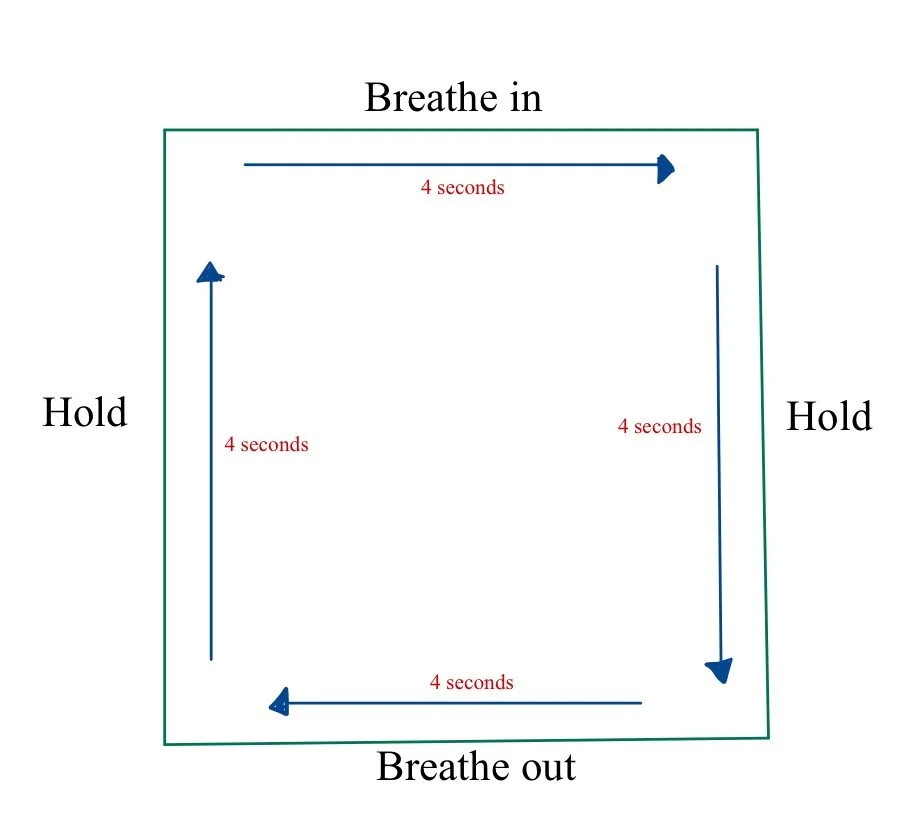
Box Breathing
A technique used by therapists and athletes alike to regulate the nervous system.
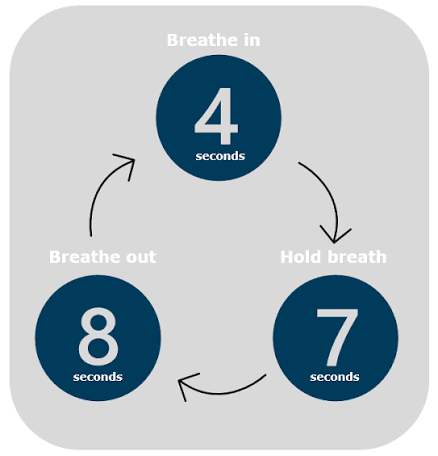
4-7-8 Method Breathing
Developed by Dr. Andrew Weil, this pattern activates the parasympathetic nervous system and can reduce anxiety quickly.
COGNITIVE (CBT) TOOLS
Challenge a Difficult Thought
CBT teaches us that our thoughts, feelings, and behaviors are connected. This simple record helps you examine a thought that's causing distress and find a more balanced perspective.
Take a moment to insightfully answer these questions.
What situation triggered this thought?
What is the automatic thought? (write it exactly as it appeared)
What evidence supports this thought?
What evidence goes against it?
What is a more balanced, realistic thought?
Common Cognitive Distortions
These are thinking patterns that our brains fall into, especially under stress. Recognizing them is the first step to changing them.
→ All-or-nothing thinking: seeing things in black and white, no middle ground
→ Catastrophizing: assuming the worst-case scenario will happen
→ Mind reading: assuming you know what others are thinking
→ Emotional reasoning: "I feel it, therefore it must be true"
→ Should statements: rigid rules about how you or others must behave
→ Personalization: blaming yourself for things outside your control
The Self-Compassion Pause
Adapted from Dr. Kristin Neff's work. Use this in moments of self-criticism or pain.
1 Place a hand on your heart and acknowledge: "This is a moment of suffering."
2 Remind yourself: "Suffering is part of life. I am not alone in this."
3 Ask yourself: "What would I say to a close friend in this exact situation?"
4 Now say that to yourself, with the same warmth you'd offer them.
DBT Informed
TIPP for Intense Emotions
A Dialectical Behavior Therapy skill for when emotions feel overwhelming and you need fast relief.
T Temperature: splash cold water on your face or hold ice cubes to quickly calm the nervous system.
I Intense exercise: even 5 minutes of movement can reduce emotional intensity.
P Paced breathing: slow your exhale to be longer than your inhale (try 4 in, 6 out).
P Progressive relaxation: tense and release each muscle group, starting at your feet.

emotional regulation
emotional regulation
Mindfulness
The STOP Practice
A quick mindfulness reset you can use anywhere: at your desk, in your car, before a hard conversation.
S Stop: whatever you're doing, pause for a moment.
T Take a breath: one slow, deliberate breath in and out.
O Observe: notice what's happening in your body, thoughts, and emotions without judging.
P Proceed: continue with more awareness and intention.
Reflection
Emotions Check-In
A simple daily practice to build emotional awareness. Try this in the morning or before bed.
1 Pause and take three slow breaths.
2 Ask: "What am I feeling right now?"Name it specifically (not just "bad" but curious, ashamed, lonely, relieved…).
3 Ask: "Where do I feel this in my body?"
4 Ask: "What does this feeling need from me right now?"
5 Respond with care: rest, movement, connection, or just acknowledgment.
Between Sessions
Preparing for Your Next Session
Getting the most out of therapy means staying engaged between appointments. Try these practices:
→ Keep a brief journal of moments that felt emotionally significant during the week.
→ Note any times you used a coping skill, and whether it helped.
→ Write down one thing you want to make sure you bring up in your next session.
→ Notice patterns: what triggered difficult emotions, and what eased them?